LucioFONTANA

About
Lucio Fontana is one of the key figures in 20th century art internationally and
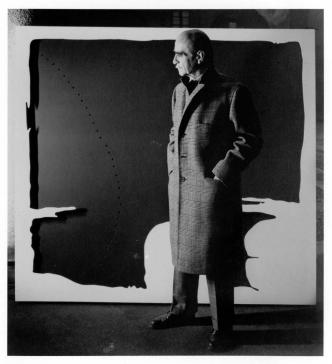
revolutionised the concept of art as a pioneer of new forms and ideas. Established as one of the major protagonists of contemporary art, Fontana’s broad creativity ranged from figuration to extreme abstraction in a constant experimentation with new materials and techniques. The Argentine-Italian artist helped pioneer the Spatialist movement and was particularly known for his Cuts series, slashed paintings that became symbols of the postwar era. The radical gesture of the cut was symptomatic for the artist's broader search to integrate the space of art and the space of the viewer. Throughout all his work – which includes paintings, sculptures, drawings, ceramics and light-based installations- the artist demonstrated a relentless interest in surface and dimensionality.
Born in 1899 in Rosario de Santa Fe, Argentina to Italian immigrant parents, Lucio Fontana was sent to Italy in 1905 where he remained for 17 years. After his return to Argentina in 1922, Fontana began to work as a sculptor, which included working with his father, the sculptor Luigi Fontana, whose production focused on public and commemorative sculpture.
In 1927 he returned to Italy and enrolled at the Brera Academy of Fine Arts in Milan, where he studied under Adolfo Wildt. His first works were characterised by a rough, vibrant plasticity, but from the early 1930s onwards, he began to produce entirely new work.
In 1930, Fontana participated at the 17th Venice Biennale and began exhibiting regularly at the Galleria del Milione in Milan, where he had his first solo exhibition in 1931.
Throughout the 1930s he travelled extensively between France and Italy. In Paris he joined the international Abstraction-Création group, an association of abstract artists whose aim was to promote abstract art through joint group exhibitions, publications and talks.
During this period, Fontana developed his skills in ceramics in Albisola, Italy and later on at the Sèvres factory near Paris. His ceramics were later shown at MoMA’s 1949 group exhibition Twentieth-Century Italian Art as well as at two subsequent Venice Biennales in 1948 and 1950.
In 1940, he moved back to Argentina where he was teaching at several art schools and where he, together with other artists and students, published the Manifiesto Blanco in 1946. The Manifiesto declared “static” art forms and the differentiation of artistic discipline as obsolete and laid the foundations for Spatialism, a direction Fontana fully developed after his return to Italy in 1947.
Spatialism proposed to synthesize colour, movement, space and time into a new type of art:
“We have renounced the practice of familiar art forms and are working to develop a kind of art based on the unity of time and space… We think of art as a sum of physical elements: color, sound, movement, time, and space, brought together in a physical and mental whole. Color, an element of space; sound, an element of time; and movement, unfolding in space and time. These are the foundations of Spatialist art.” (from a talk by Lucio Fontana at the Milan Triennale in 1951, published in Lucio Fontana, Manifesti Scritti Interviste, ed. Angela Sanna [Milan: ABSCONDITA, 2015], 47).
In the following years, the aesthetics of Spatialism was confirmed in a series of manifestos and policy statements, and found concrete expression in the works that Fontana exhibited at the 24th Venice Biennale in 1948.
The year 1949 was a decisive moment in Fontana’s career, as he created his first Spatial Environment with which he demonstrated the breaking of boundaries between painting, sculpture and architecture in order to conquer what he called the “spatial concept of art”: “I do not want to make a painting; I want to open up space, create a new dimension, tie in the cosmos, as it endlessly expands beyond the confining plane of the picture,”.
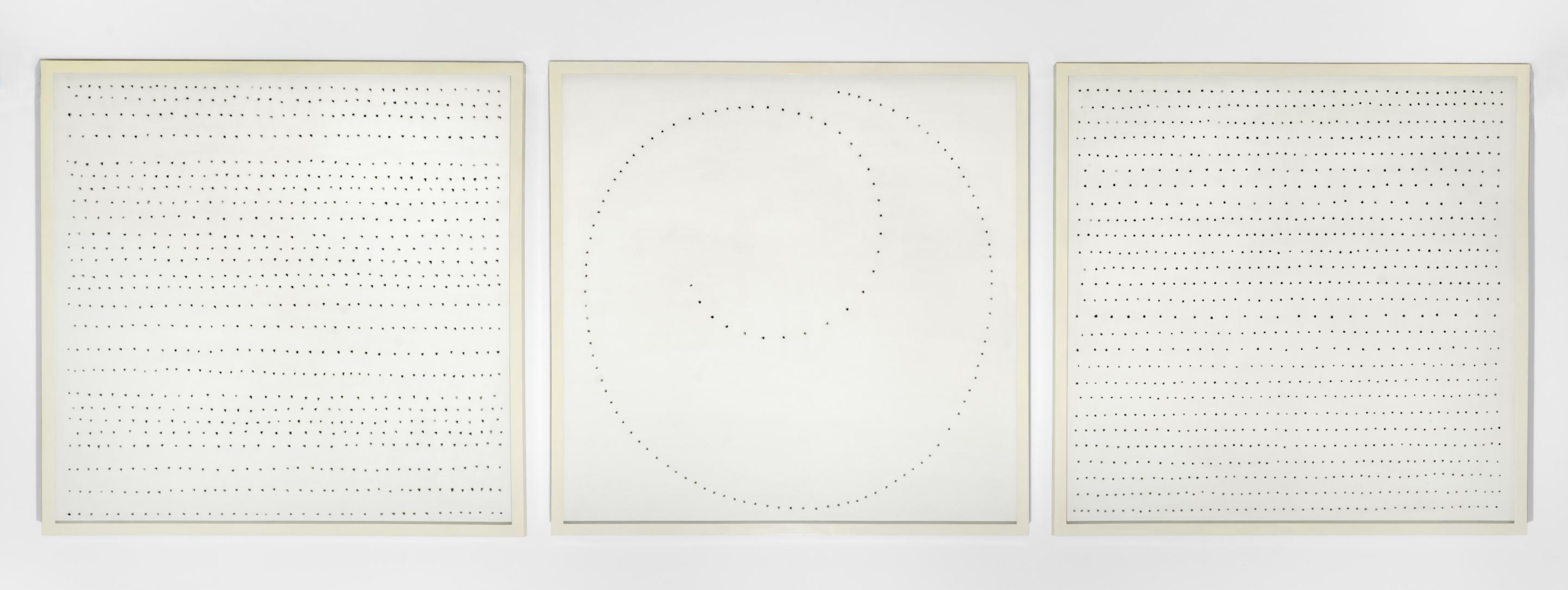
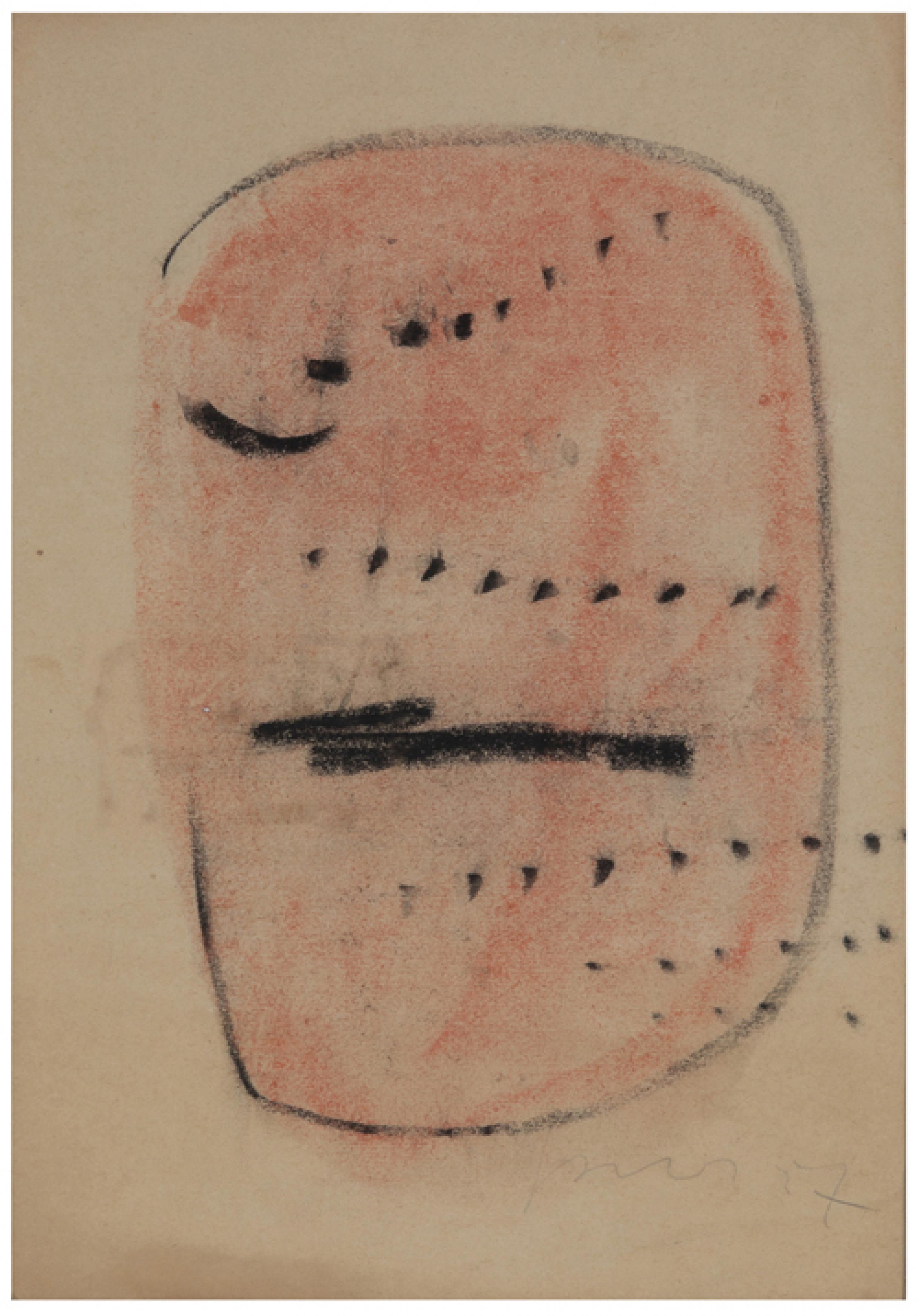
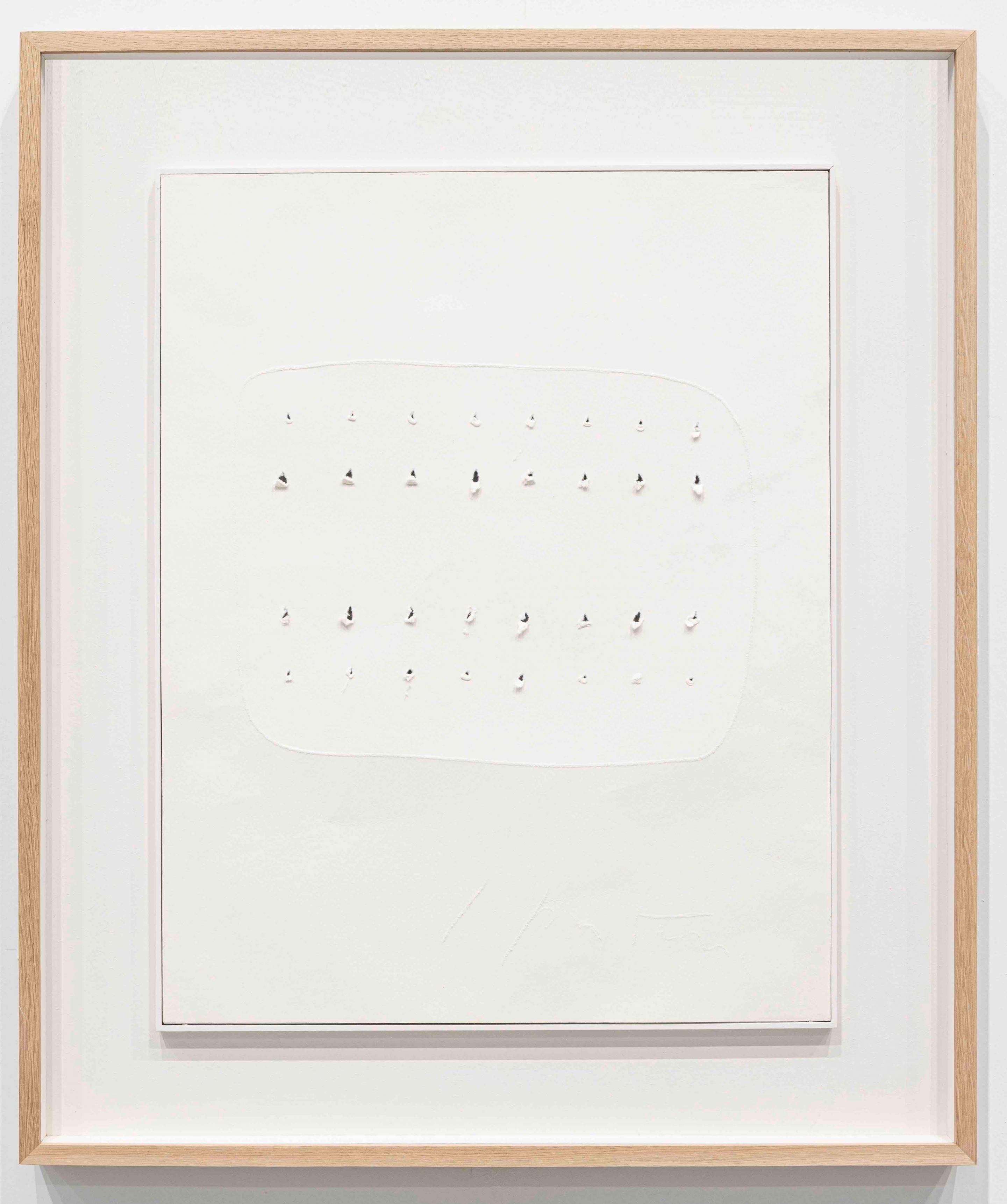
The same year, Fontana started to conceive his Holes series in which he pierced the canvas with an awl, lacerating it with stigmata-like markings. Through the Spatialist lens, these punctures transformed a two-dimensional form into a three-dimensional space. In addition to the motif of the holes, Fontana started to enrich his canvases with colourful, protruding fragments of glass, giving way to the Stones cycle.
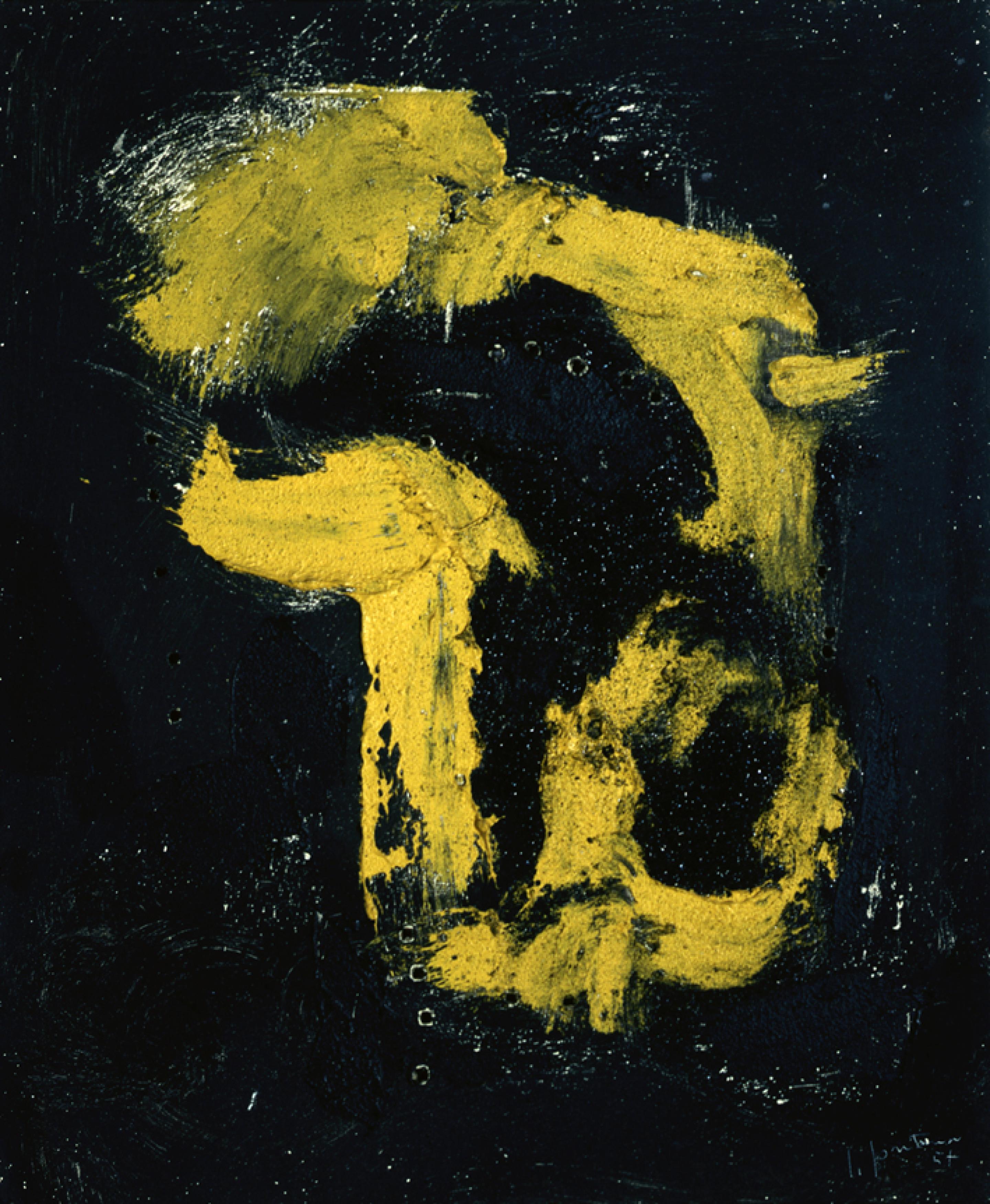
From 1954 onwards, he further developed his language, creating the new work groups of Impastos and Baroques which were later exhibited at the 29th Venice Biennale in 1958.
Towards the end of 1958, the series of Cuts began to take shape. The cuts immortalise the physical act of their creation, in which Fontana uses the full force of his gesture to score through the canvas: “My cuts are above all a philosophical statement, (…) an act of faith in the infinite, an affirmation of spirituality. When I sit down to contemplate one of my cuts, I sense all at once an enlargement of the spirit, I feel like a man freed from the shackles of matter, a man at one with the immensity of the present and of the future”. The Cuts at first occur in dense sequences, then tend to be reduced to a few or even a single sharp one.
The series was later shown at Documenta in Kassel and the 5th São Paulo Biennial in
Brazil.
Towards the end of the 1950s, Fontana conceived the Quanta series that consisted of groups of oddly shaped canvases which can be assembled in various formations, as well as the Natures series, large spherical terracotta sculptures sliced by slashes and gashes that were produced in Albisola.
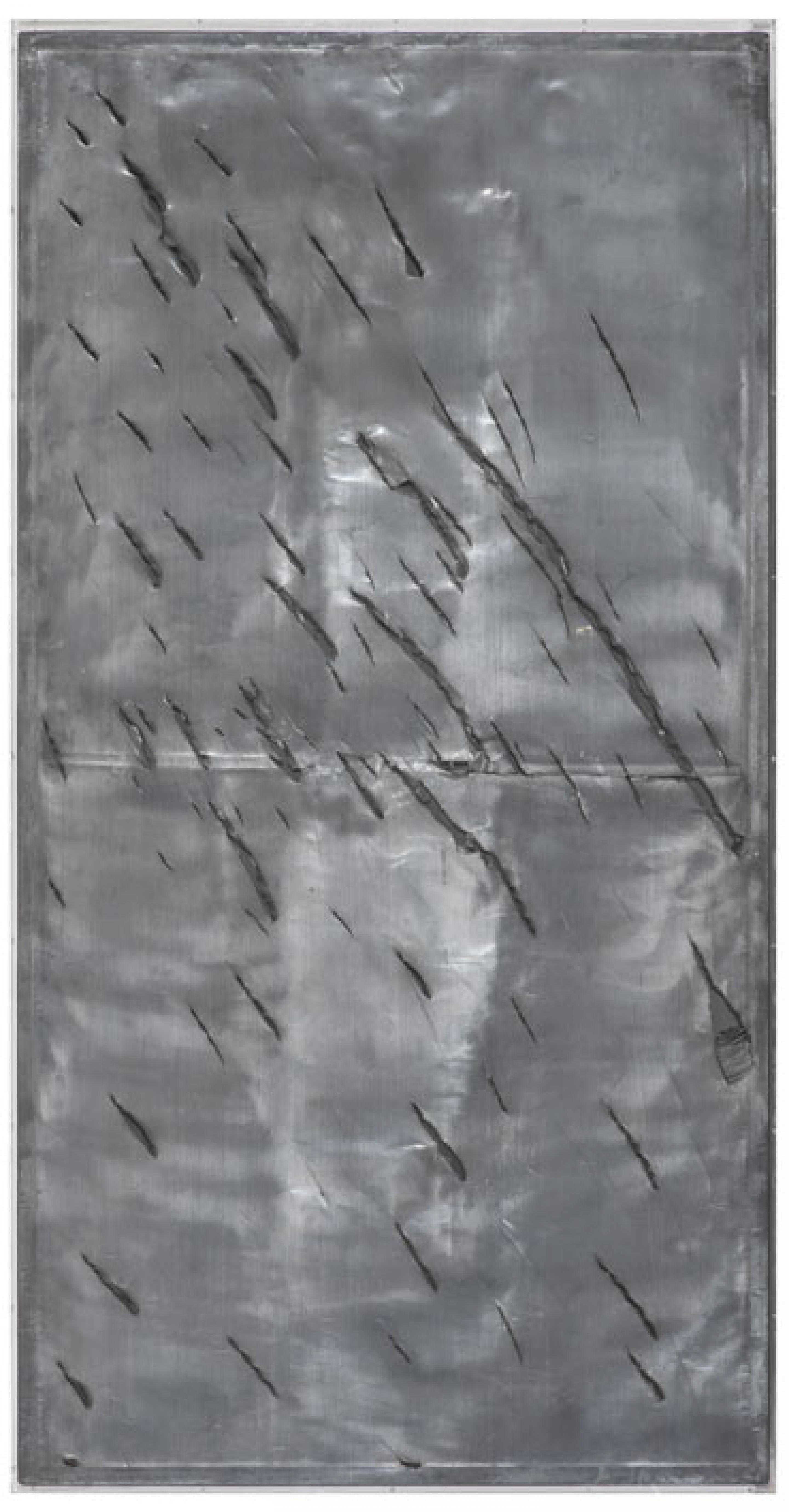
From the beginning of the 1960s, Fontana concentrated on the series of Oils which are thickly layered, colourful oil paintings shot through with holes or tears. Significant works of that series, the so called Venezie, were presented at Fontana’s first US solo exhibition at the Martha Jackson Gallery in New York in 1961. Inspired by the city with its myriad shiny skyscrapers, he conceived yet another type of work, the Metals which are mirrored sheets of metal with blanked out and cut surfaces.
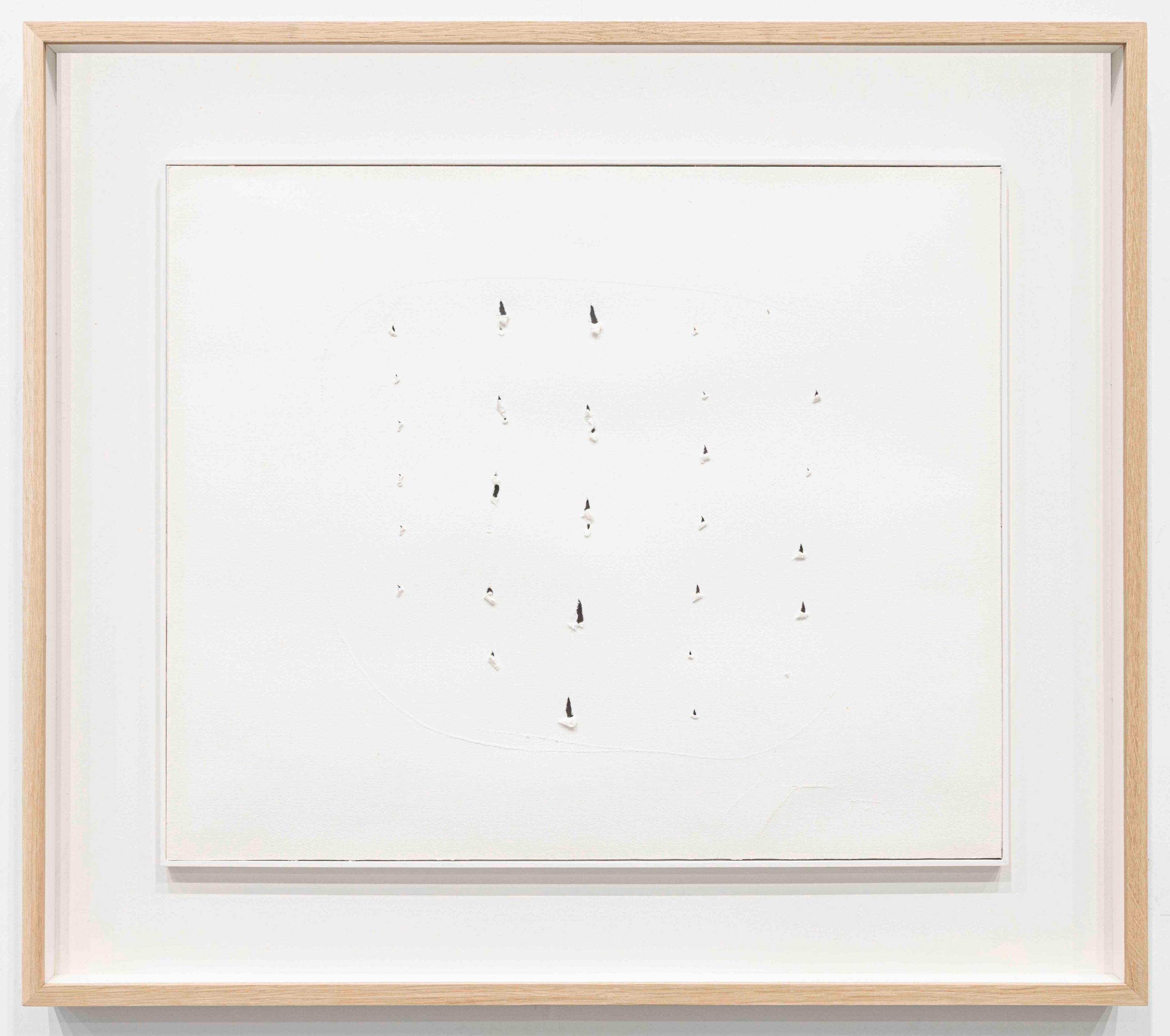
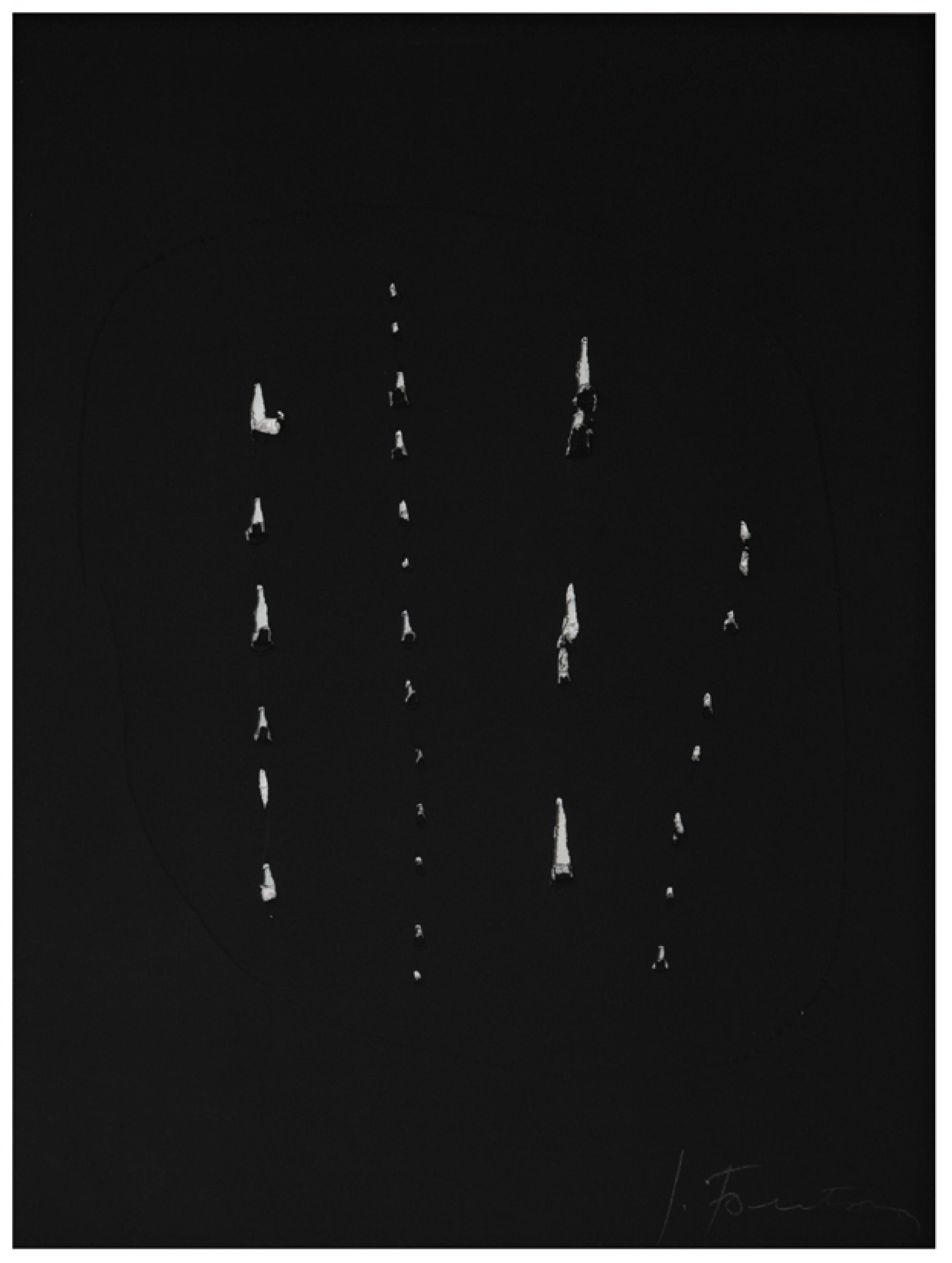
Also dating from the first half of the 1960s is the series of the Fine di Dio (End of God), oval-shaped, monochrome canvases with crisscrossed holes, gashes and incisions, about which Fontana stated: “For me they signify the infinite, the inconceivable thing, the end of figuration, the principle of nothingness”.
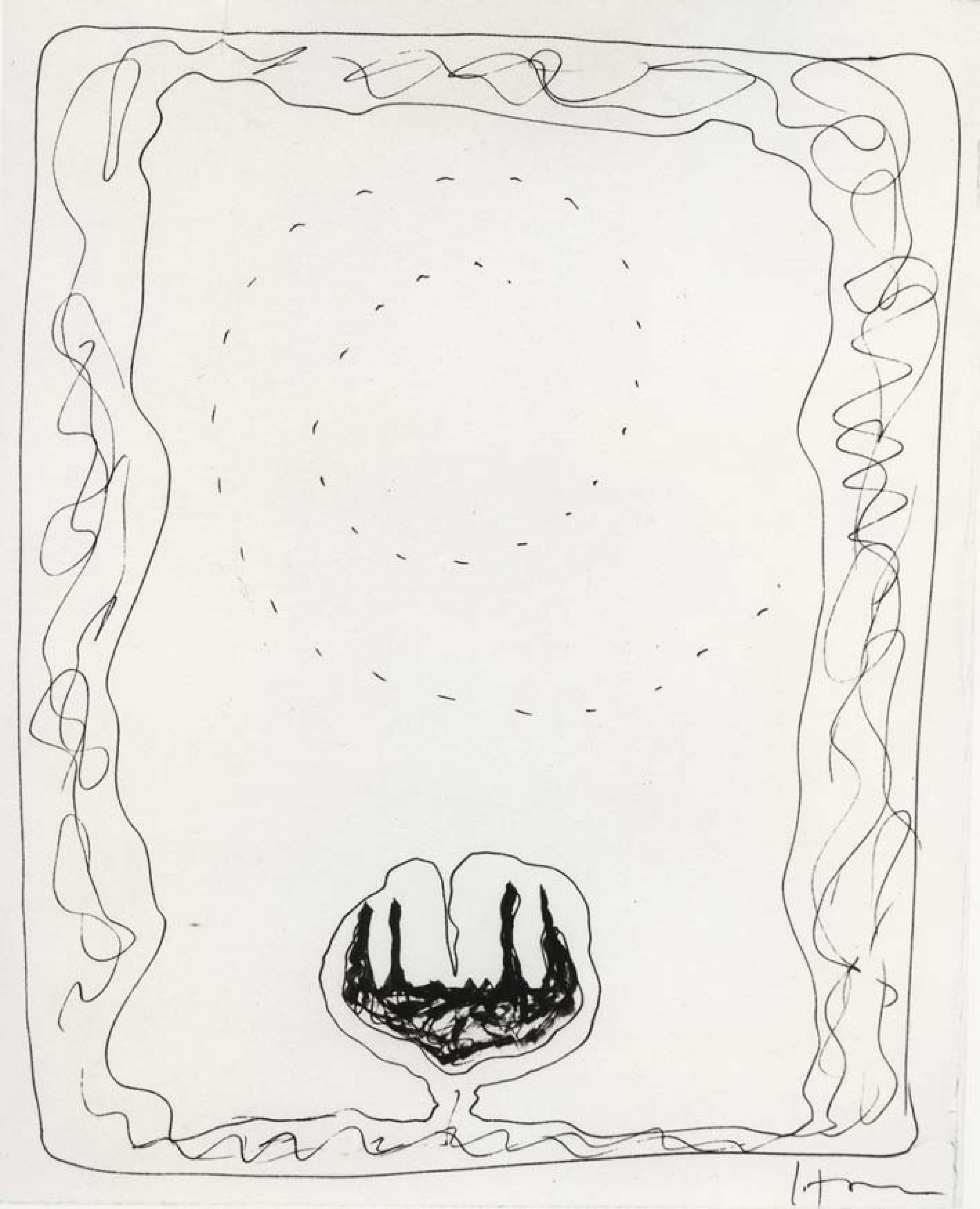
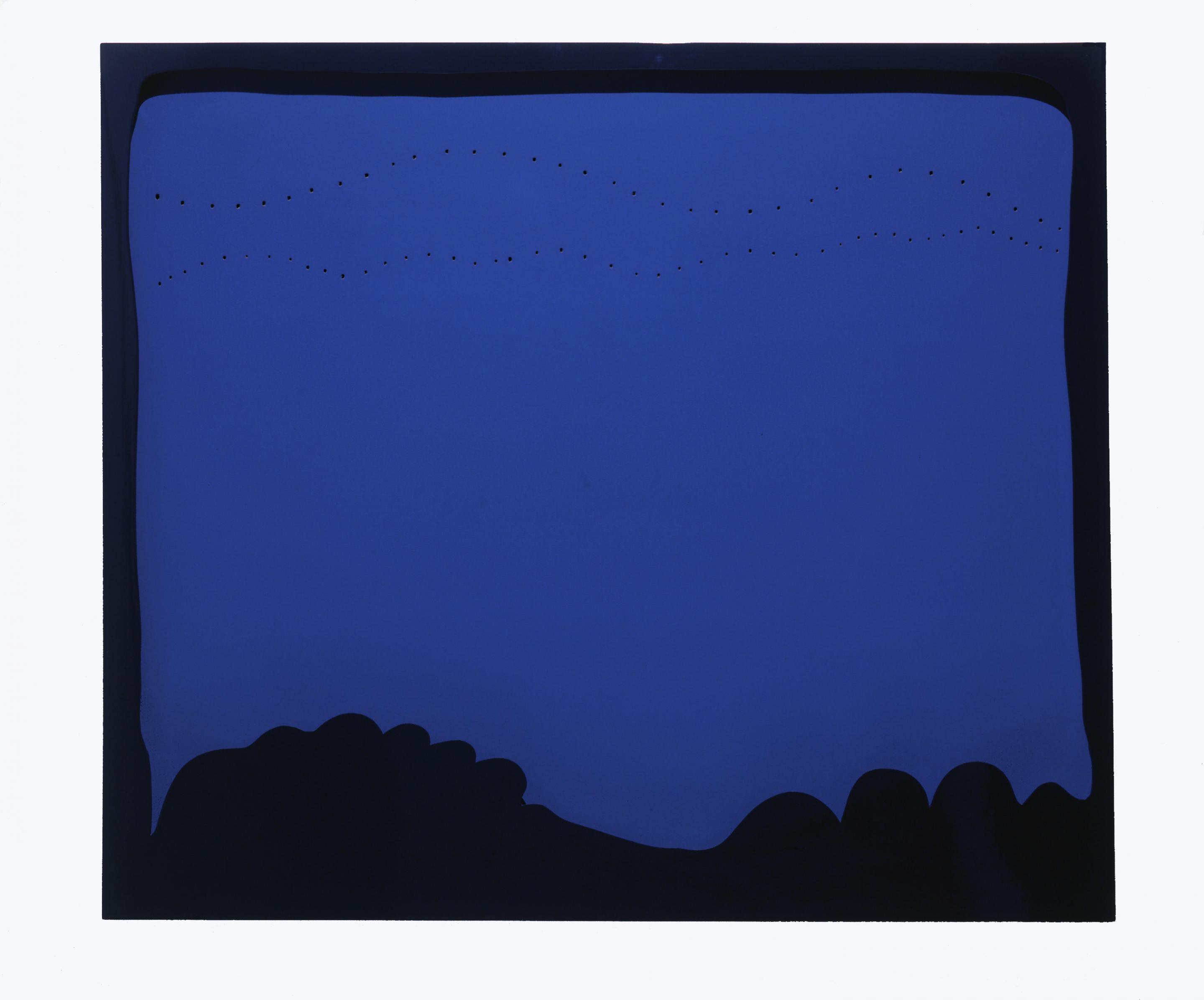
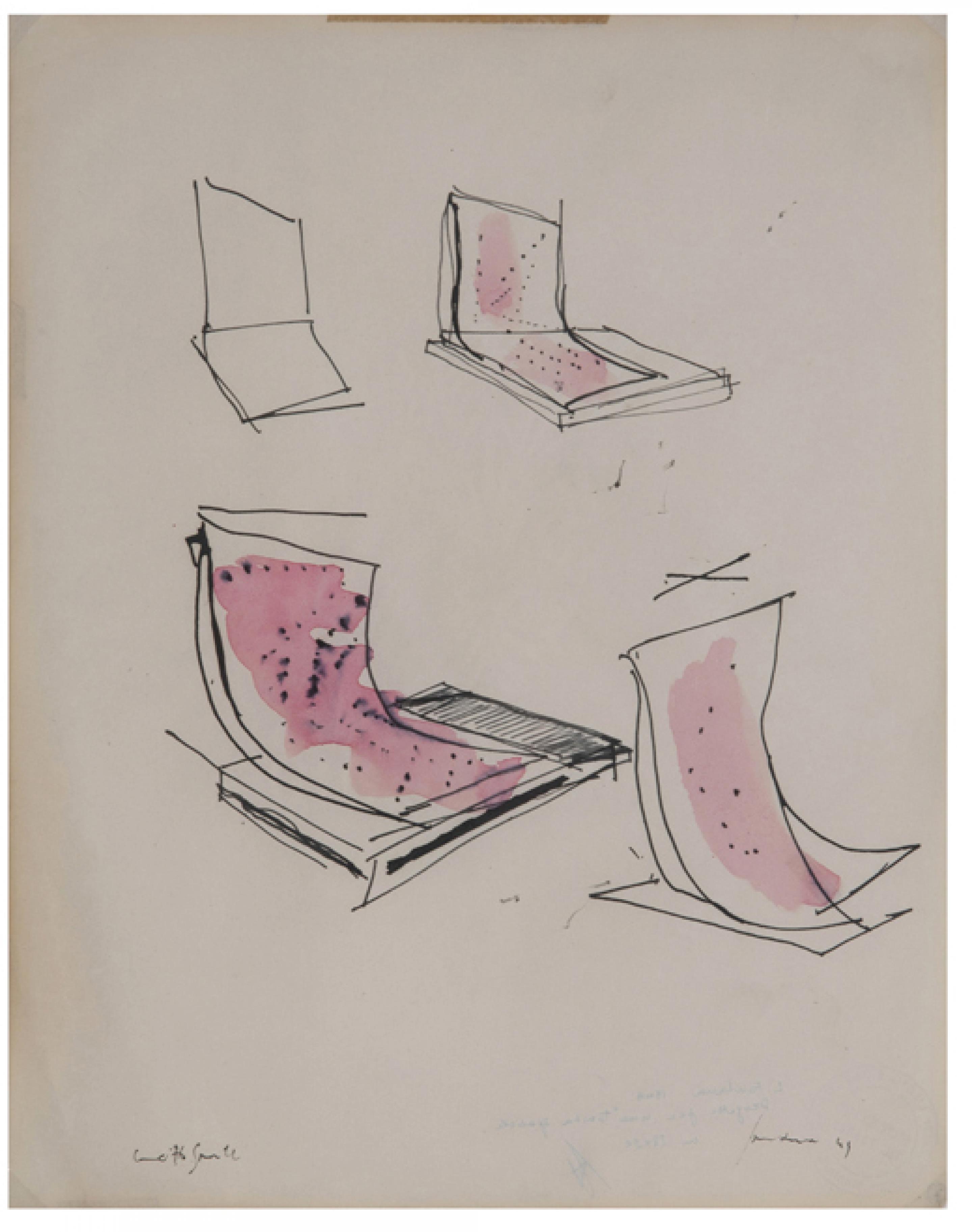
Fontana concurrently also worked on the Teatrini, works in which perforated canvases are set in oddly shaped lacquered wooden frames. The Little Theaters are the quintessence of spatial figuration where a unicolored background, furrowed with holes, is presented as some kind of “sky” bordered by a shaped frame. The early Theaters still refer to abstract forms, however figurative references, particularly to trees, soon take over. At the 33rd Venice Biennale in 1966, Fontana collaborated with the architect Carlo Scarpa with whom he completed his idea of Spatialism: together they created a labyrinthine oval-shaped room in which five white canvases, all crossed by a single slash, were displayed within niches illuminated by white light. The installation won critical acclaim and Fontana was awarded the Grand Prize for Painting. In 1968, Lucio Fontana died near Varese.
Of particular significance among the many retrospectives and anthological exhibitions dedicated to the artist were the five exhibitions held in Milan in 1999 to celebrate the centenary of his birth, curated by the leading experts on his work. The most recent, major exhibitions include the 2014 retrospective at the Musée d'Art Moderne de la Ville de Paris with over 200 sculptures, paintings, ceramics and installations from the 1920s to 1968.
In 2014/2015, the Museo del Novecento in Milan organized the double exhibition Klein Fontana. Milan Paris. 1957 – 1962., juxtaposing works by both Fontana and Yves Klein. Four years later, the Met Breuer in New York City in collaboration with the Guggenheim Museum Bilbao showcased the exhibition Lucio Fontana: On the Treshold. In October 2024, the Von der Heydt Museum in Wuppertal, Germany opened Lucio Fontana: Expectation, a large survey exhibition of the artist’s works.
revolutionised the concept of art as a pioneer of new forms and ideas. Established as one of the major protagonists of contemporary art, Fontana’s broad creativity ranged from figuration to extreme abstraction in a constant experimentation with new materials and techniques. The Argentine-Italian artist helped pioneer the Spatialist movement and was particularly known for his Cuts series, slashed paintings that became symbols of the postwar era. The radical gesture of the cut was symptomatic for the artist's broader search to integrate the space of art and the space of the viewer. Throughout all his work – which includes paintings, sculptures, drawings, ceramics and light-based installations- the artist demonstrated a relentless interest in surface and dimensionality.
Born in 1899 in Rosario de Santa Fe, Argentina to Italian immigrant parents, Lucio Fontana was sent to Italy in 1905 where he remained for 17 years. After his return to Argentina in 1922, Fontana began to work as a sculptor, which included working with his father, the sculptor Luigi Fontana, whose production focused on public and commemorative sculpture.
In 1927 he returned to Italy and enrolled at the Brera Academy of Fine Arts in Milan, where he studied under Adolfo Wildt. His first works were characterised by a rough, vibrant plasticity, but from the early 1930s onwards, he began to produce entirely new work.
In 1930, Fontana participated at the 17th Venice Biennale and began exhibiting regularly at the Galleria del Milione in Milan, where he had his first solo exhibition in 1931.
Throughout the 1930s he travelled extensively between France and Italy. In Paris he joined the international Abstraction-Création group, an association of abstract artists whose aim was to promote abstract art through joint group exhibitions, publications and talks.
During this period, Fontana developed his skills in ceramics in Albisola, Italy and later on at the Sèvres factory near Paris. His ceramics were later shown at MoMA’s 1949 group exhibition Twentieth-Century Italian Art as well as at two subsequent Venice Biennales in 1948 and 1950.
In 1940, he moved back to Argentina where he was teaching at several art schools and where he, together with other artists and students, published the Manifiesto Blanco in 1946. The Manifiesto declared “static” art forms and the differentiation of artistic discipline as obsolete and laid the foundations for Spatialism, a direction Fontana fully developed after his return to Italy in 1947.
Spatialism proposed to synthesize colour, movement, space and time into a new type of art:
“We have renounced the practice of familiar art forms and are working to develop a kind of art based on the unity of time and space… We think of art as a sum of physical elements: color, sound, movement, time, and space, brought together in a physical and mental whole. Color, an element of space; sound, an element of time; and movement, unfolding in space and time. These are the foundations of Spatialist art.” (from a talk by Lucio Fontana at the Milan Triennale in 1951, published in Lucio Fontana, Manifesti Scritti Interviste, ed. Angela Sanna [Milan: ABSCONDITA, 2015], 47).
In the following years, the aesthetics of Spatialism was confirmed in a series of manifestos and policy statements, and found concrete expression in the works that Fontana exhibited at the 24th Venice Biennale in 1948.
The year 1949 was a decisive moment in Fontana’s career, as he created his first Spatial Environment with which he demonstrated the breaking of boundaries between painting, sculpture and architecture in order to conquer what he called the “spatial concept of art”: “I do not want to make a painting; I want to open up space, create a new dimension, tie in the cosmos, as it endlessly expands beyond the confining plane of the picture,”.
The same year, Fontana started to conceive his Holes series in which he pierced the canvas with an awl, lacerating it with stigmata-like markings. Through the Spatialist lens, these punctures transformed a two-dimensional form into a three-dimensional space. In addition to the motif of the holes, Fontana started to enrich his canvases with colourful, protruding fragments of glass, giving way to the Stones cycle.
From 1954 onwards, he further developed his language, creating the new work groups of Impastos and Baroques which were later exhibited at the 29th Venice Biennale in 1958.
Towards the end of 1958, the series of Cuts began to take shape. The cuts immortalise the physical act of their creation, in which Fontana uses the full force of his gesture to score through the canvas: “My cuts are above all a philosophical statement, (…) an act of faith in the infinite, an affirmation of spirituality. When I sit down to contemplate one of my cuts, I sense all at once an enlargement of the spirit, I feel like a man freed from the shackles of matter, a man at one with the immensity of the present and of the future”. The Cuts at first occur in dense sequences, then tend to be reduced to a few or even a single sharp one.
The series was later shown at Documenta in Kassel and the 5th São Paulo Biennial in
Brazil.
Towards the end of the 1950s, Fontana conceived the Quanta series that consisted of groups of oddly shaped canvases which can be assembled in various formations, as well as the Natures series, large spherical terracotta sculptures sliced by slashes and gashes that were produced in Albisola.
From the beginning of the 1960s, Fontana concentrated on the series of Oils which are thickly layered, colourful oil paintings shot through with holes or tears. Significant works of that series, the so called Venezie, were presented at Fontana’s first US solo exhibition at the Martha Jackson Gallery in New York in 1961. Inspired by the city with its myriad shiny skyscrapers, he conceived yet another type of work, the Metals which are mirrored sheets of metal with blanked out and cut surfaces.
Also dating from the first half of the 1960s is the series of the Fine di Dio (End of God), oval-shaped, monochrome canvases with crisscrossed holes, gashes and incisions, about which Fontana stated: “For me they signify the infinite, the inconceivable thing, the end of figuration, the principle of nothingness”.
Fontana concurrently also worked on the Teatrini, works in which perforated canvases are set in oddly shaped lacquered wooden frames. The Little Theaters are the quintessence of spatial figuration where a unicolored background, furrowed with holes, is presented as some kind of “sky” bordered by a shaped frame. The early Theaters still refer to abstract forms, however figurative references, particularly to trees, soon take over. At the 33rd Venice Biennale in 1966, Fontana collaborated with the architect Carlo Scarpa with whom he completed his idea of Spatialism: together they created a labyrinthine oval-shaped room in which five white canvases, all crossed by a single slash, were displayed within niches illuminated by white light. The installation won critical acclaim and Fontana was awarded the Grand Prize for Painting. In 1968, Lucio Fontana died near Varese.
Of particular significance among the many retrospectives and anthological exhibitions dedicated to the artist were the five exhibitions held in Milan in 1999 to celebrate the centenary of his birth, curated by the leading experts on his work. The most recent, major exhibitions include the 2014 retrospective at the Musée d'Art Moderne de la Ville de Paris with over 200 sculptures, paintings, ceramics and installations from the 1920s to 1968.
In 2014/2015, the Museo del Novecento in Milan organized the double exhibition Klein Fontana. Milan Paris. 1957 – 1962., juxtaposing works by both Fontana and Yves Klein. Four years later, the Met Breuer in New York City in collaboration with the Guggenheim Museum Bilbao showcased the exhibition Lucio Fontana: On the Treshold. In October 2024, the Von der Heydt Museum in Wuppertal, Germany opened Lucio Fontana: Expectation, a large survey exhibition of the artist’s works.